
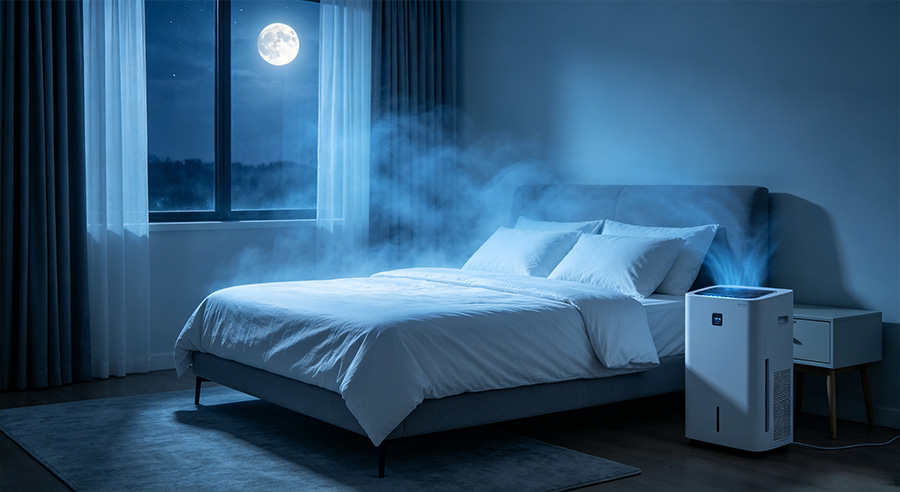
How to Create a Cool, Sleep-Friendly Bedroom for Hot Summer Nights
There’s nothing worse than tossing and turning on a hot summer night, sticky with sweat, watching the clock tick later and later. Sleep quality plummets when temperatures rise, and poor sleep affects your mood, energy, focus, and long-term health. The ideal bedroom temperature for sleep is between 60–67°F (15–19°C), and anything above 75°F starts to significantly disrupt deep sleep.
The good news is you don’t have to suffer through hot nights. With the right cooling setup and a few simple changes, you can turn your bedroom into a cool, quiet oasis that helps you fall asleep fast and stay asleep all night.
In this guide, we’ll cover everything from choosing the right cooling equipment to bedding, timing, and sleep habits—all designed to give you the cool, restful sleep you need even on the hottest summer nights.
Why Heat Ruins Sleep (And Why It Matters)
Your body’s core temperature naturally drops as part of your sleep cycle. This drop is what triggers feelings of sleepiness and helps you enter deep, restorative sleep stages. When your bedroom is too hot, your body can’t cool down properly. You spend more time in light sleep, wake up more frequently during the night, and wake up feeling unrefreshed.
It’s not just discomfort—chronic poor sleep from heat can contribute to fatigue, irritability, weakened immunity, and even worse metabolic health. Investing in a cool bedroom isn’t a luxury—it’s an investment in your health.
The Foundation: Choose the Right Cooling Equipment for Your Bedroom
The most important factor in a cool bedroom is having reliable, quiet cooling that maintains a consistent temperature all night. Let’s compare your options.
Portable Air Conditioner: Best All-Round Choice for Most Bedrooms
For most people, a portable air conditioner is the best bedroom cooling solution. Here’s why:
- Actual temperature control: It actively cools and dehumidifies the room, unlike fans.
- No permanent installation: Simple window kit installs in minutes with no screws or drilling. Perfect for renters.
- Quiet sleep modes: Modern units have dedicated sleep settings that reduce fan speed, dim lights, and operate at under 50 dB—quiet enough for most people to sleep through.
- Programmable timers: Set it to turn off an hour after you fall asleep, or cycle on and off through the night.
- Consistent performance: Works no matter how hot or humid it gets outside.
Choosing a bedroom-friendly portable AC:
- Size it correctly: 8,000–12,000 BTU is enough for most bedrooms.
- Look for “sleep mode” or “night mode” as a feature.
- Inverter compressors are quieter and maintain more even temperatures.
- Place it on the side of the room away from your bed, so the noise is farther away.
- Keep the exhaust hose as straight as possible to minimize airflow noise.
Window AC Unit: Powerful but Less Flexible
Window units are powerful and relatively affordable, but they have big downsides for bedrooms:
- They block your window completely and often require permanent mounting
- They can be noisy because the compressor is right in the window
- They let in lots of outside noise even when off
- Installation is more involved and may violate lease agreements
If you own your home and don’t mind losing window use, a window AC is a solid option. For renters or anyone who wants flexibility, portable AC is better.
Fans: Great Supplement, Not a Standalone Solution
Fans are excellent for boosting comfort and letting you run your AC a little warmer. But on hot nights above 80°F, a fan alone just blows hot air around and won’t give you the cool temperatures you need for deep sleep.
The best approach: use your portable AC as the primary cooling source, and add a small bedside fan for extra personal cooling right where you sleep. This gives you the best of both worlds—consistent temperature control plus the soothing feeling of air movement.
Optimize Your Bedroom for Cool Sleep
Having the right equipment is half the battle. These environmental tweaks will make your bedroom naturally cooler and more sleep-friendly.
1. Block Heat During the Day
The easiest way to have a cool bedroom at night is to prevent it from heating up during the day.
- Close blackout curtains or blinds on sunny windows first thing in the morning. Thermal blackout curtains can reduce solar heat gain by 70%+.
- Keep the bedroom door closed during the day so hot air from the rest of the house doesn’t drift in.
- Turn off all unnecessary electronics in the bedroom during the day—TVs, chargers, and lamps all add small amounts of heat that build up.
2. Pre-Cool Before Bed
Don’t wait until you’re sweaty and ready for bed to turn on the cooling. Turn your portable AC on 30–60 minutes before bedtime, set to a lower temperature, to pull the existing heat out of the room. By the time you’re ready to sleep, the room is already at your ideal temperature.
You can then raise the temperature a couple degrees for sleeping, or switch to sleep mode, which uses less energy and runs quieter.
3. Control Humidity
Humidity makes warm temperatures feel much hotter and stickier. High humidity also makes it harder for your body to cool itself through sweating.
A good portable AC automatically dehumidifies as it cools, which is one of its biggest advantages over fans and evaporative coolers. For especially humid climates, run the dehumidifier mode for an hour before bed to dry out the air. Aim for bedroom humidity between 40–60% for the most comfortable sleep.
4. Keep Air Moving Gently
Soft, gentle air movement at night helps evaporate sweat from your skin and makes the room feel several degrees cooler.
- A small table fan on your nightstand on low speed is perfect.
- Ceiling fans on low speed and counterclockwise rotation work great.
- Avoid strong direct blasts of air on your face all night—they can dry out your sinuses and wake you up.
Bedding and Sleep Gear That Makes a Difference
Your bedding plays a huge role in how hot you feel at night. The right materials help your body dissipate heat; the wrong ones trap it like a blanket in a dryer.
Mattress and Pillows
- Memory foam mattresses are famous for trapping heat. If you sleep hot, consider a mattress with cooling gel, latex, or innerspring construction that allows more airflow.
- Cooling mattress toppers and pads are a cheaper alternative to replacing your whole mattress.
- Choose pillows made with breathable materials like latex, buckwheat, or cooling gel memory foam. Avoid solid memory foam pillows if you sleep hot.
Sheets and Blankets
- Best fabrics for hot sleepers: 100% cotton percale, linen, bamboo rayon, Tencel. These are breathable and wick moisture away.
- Avoid: Polyester, microfiber, heavy sateen weaves, and flannel in summer.
- Use a lightweight duvet or just a top sheet in summer instead of a thick comforter.
- Wash your sheets weekly in cool water. Fresh, clean sheets feel cooler and more comfortable.
Pajamas
Wear loose, lightweight pajamas made from cotton, linen, or moisture-wicking athletic fabrics. Tight synthetic pajamas trap heat and sweat. Some people prefer sleeping naked for maximum cooling—that works too, as long as you’re comfortable with it.
Bedtime Habits for Cooler Sleep
Your evening routine affects your body temperature and how easily you’ll fall asleep in the heat.
1. Avoid Heat Before Bed
- Don’t take hot showers or baths right before bed. Warm showers raise your core temperature. If you bathe at night, take a lukewarm (not cold) shower and let yourself air dry partially.
- Avoid heavy meals, alcohol, and intense exercise within 2–3 hours of bedtime. All of these raise your core temperature.
- Limit screen time before bed. Aside from blue light affecting melatonin, devices emit small amounts of heat and keep your brain stimulated.
2. Cool Your Body Down
- Put your pillowcase in a plastic bag and stick it in the freezer for 10–15 minutes before bed. The cool surface helps you fall asleep faster.
- Use a cold compress on your forehead, neck, or wrists for a few minutes before bed.
- Keep a glass of cool water by your bed. Sipping water helps regulate body temperature.
3. Time Your Cooling Wisely
- Use your AC’s timer function so it doesn’t run full blast all night. Many people find they only need strong cooling for the first few hours of sleep.
- If nights cool down where you live, open windows in the early morning to flush out warm air, then close them and draw curtains before the day heats up.
Common Bedroom Cooling Mistakes to Avoid
- Setting the AC way too cold. 60°F sounds nice, but it’s colder than you need for sleep, wastes energy, and can actually make you wake up cold later in the night. 65–68°F is ideal for most people.
- Pointing the AC directly at your bed. Direct cold air blowing on you all night can cause dry skin, sinus issues, and discomfort.
Related posts
Small apartments have unique cooling challenges. Limited square footage, lots of sunlight from large windows, rarely ideal window placement, and often strict lease rules about... Continue reading
When summer heat hits, the market is flooded with cooling products that all promise relief. Portable air conditioners, tower fans, evaporative coolers, window units—each one... Continue reading
Summer electricity bills have a way of shocking homeowners every year. As temperatures rise, our air conditioners run longer and work harder, and the costs... Continue reading
Rooms without windows are some of the hardest spaces to keep cool in summer. Whether it’s an interior bedroom, a basement office, a converted garage,... Continue reading
Summer temperatures keep climbing year after year, and staying cool at home is no longer a luxury—it’s a basic necessity for comfort, productivity, and even... Continue reading

Add comment